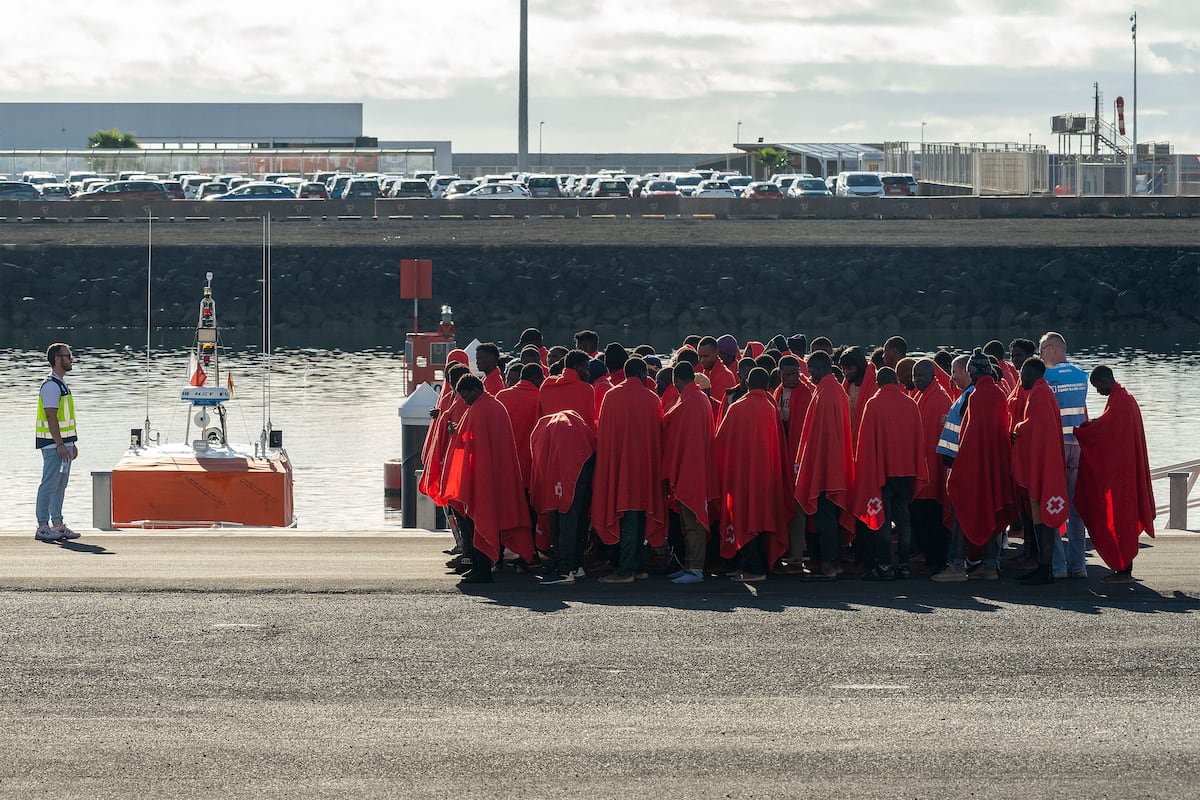
An investigation by several media outlets, including EL PAÍS, reveals that Frontex provided the European police agency with indiscriminate information on thousands of people, gathered from covert interrogations of new arrivals in Europe
For years, under the banner of combating human smuggling, the European Border and Coast Guard Agency, commonly known as Frontex, collected personal data from migrants upon their arrival to Europe. This was done via covert interrogations that lacked basic legal safeguards.
Between 2016 and 2023, the agency unlawfully transferred the data of more than 13,000 people to the European Union Agency for Law Enforcement Cooperation (Europol). There, the data was stored in criminal intelligence files for use in EU police investigations. An investigation by Le Monde, Solomon – a non-profit based in Greece – and EL PAÍS based on hundreds of pages of internal documents and interviews with data protection experts and lawyers reveals the involvement of Frontex and Europol in opaque and legally questionable practices. These have led to the criminalization of migrants and the EU-based activists who assist them or have been in contact with them.
The border agency was forced to change its data transfer protocols following a report by an independent EU body that deemed these practices to be unlawful.
“My whole life was in that police file: my relatives, my calls to my mother, even false details about my sex life. They wanted to portray me as a promiscuous lesbian, using morality to make me look suspicious,” says Helena Maleno, 54, a Spanish human rights activist. She was targeted by law enforcement because of her work informing authorities about people in danger trying to reach Europe by sea. Criminal investigations launched more than a decade ago by authorities in Spain and Morocco reveal the extent of the police siege around her.
This article was aggregated automatically by CyberWire Daily's newsfeed engine. Original reporting: english.elpais.com.